Tuesday, December 18, 2012

Co-blogging and the future of Renee's Library

Hello everyone, I know it's been a while, but I plan on making a comeback. :D

Today I'm writing to announce that in addition to this blog and my cross stitching blog (http://nitzascrossstitch.blogspot.com/), I have now become a co-blogger with four other bloggers on BookBooks&MoreBooks (http://theshortone08.blogspot.com/). I met the creator of the blog, Martha, in a group on goodreads.com and she said she was looking for bloggers, so I volunteered along with two others. However, I am not abandoning this blog (although at this point it seems like I have). BooksBooks&MoreBooks (or BBMB for short) is mostly YA novel reviews and Martha has allowed me to posts my reviews here as well (although I'll change them a bit before posting them here). Plus, I will also review Adult fiction and memoirs here. 

So check out BBMB and be prepared for new reviews here as well in the coming weeks. Renee's library will continue! 

Monday, December 3, 2012

The Moon Dwellers (Book #1 of the Dwellers Saga)

The Moon Dwellers (The Dwellers, #1)
I received a free copy of The Moon Dwellers, the first book in the Dwellers trilogy, by David Estes in exchange for an honest review. Thanks to the Hunger Games trilogy, I have become a devout fan of dystopian fiction. I definitely feel that The Mood Dwellers belongs in the same category as the Hunger Games, the Razorland trilogy, and other similar novels. It is an action packed, suspenseful page-turner and I enjoyed every minute reading it.

Here is the situation. After a series of events made the earth’s surface inhabitable, humans were forced to go underground and eventually create the Tri-realms: the Sun Realm, the Moon Realm, and the Star Realm.  Seventeen- year-old Adele Rose is in the Pen as part of a life sentence after her parents were arrested and convicted as traitors. When she turns 18, which will be soon, she will be transferred to the “Max” to serve out the rest of her sentence. Her younger sister, Elsey, is currently at an orphanage and her parents have been taken to parts unknown, possibly dead. With the help of her new friends Tawni and Cole, Adele is determined to break out of the Pen and find her family.

One day, while sitting in the courtyard of the Pen, Adele spots Tristan Nailin as he travels past during his tour of the Mood Realm. Tristan is a Sun Dweller and the eldest son of President Nailin who rules the Tri-Realms. Tristan is a celebrity within the Tri-realms and most girls would do anything just to be in his presence. Adele, however, has never been enticed by his status or his good looks. To her, Tristan is just a spoil Sun dweller that lives a life of luxury in the Sun Realm while the Moon and Star dwellers suffer a life of poverty and hardship. When Tristan and Adele make eye contact, however, they experience intense headaches for reasons unknown. Tristan detests his father, the Sun Realm, and his celebrity status. Curious about his intense attraction to Adele (but, not in the “love-at-first-sight” kind of way) and the intense pain that he experiences in her presence and desperate to get away from his father and the Sun Realm, Tristan decides to go on a journey, with his friend and servant Roc, to the Moon Realm to find Adele.  And to top off everything, a war begins to brew within the Tri-Realms. The story is told in the alternating points of view of Adele and Tristan.
All the characters in this book are three dimensional with strong personalities, especially the main characters Adele and Tristan. There are no shallow characters; actually those types of people are severely frowned upon by Adele, Tristan and their friends. I think my favorite character was Cole. He is a really intense, mysterious man who is quick tempered but just as quickly comical and forgiving. He is also very protective and is a good judge of character. Although he is very curious about her, he seems to trust Adele and want to help her quite quickly. In turn, Cole’s sarcastic nature helps to break the ice that has formed around Adele over her 6 months in the Pen. Adele is quickly drawn to and mirrors Cole’s humor. There are a few interactions between them that had me laughing out loud. As a matter of fact, a good amount of sarcasm and comic relief can be found throughout the book, even within the thoughts of Adele and Tristan.

For the action fans out there, you will definitely not be disappointed with this book. There are plenty of battle scenes that include swords, whips, guns, and Tasers. But the most intriguing one are the old fashioned, hand to hand battles where there is taunting and the participants circle each other before engaging.  And despite the obvious separation of classes (Sun dwellers being the upper class, Moon being the middle and Star being the lower) and the dictatorship society (although, Tristan mentions many times how his father wants to be referred to as President rather than King…you know, to give the illusion of a democracy when there clearly isn't one…classic dystopian), there still remains a sense of fair play in battle, at least on occasion. For example, in the Pen, when a fight breaks out between two prisoners (or “guests” as the guards ironically call them), even if one of the prisoners has a group of friends or is a part of a gang, no one is to interfere with the battle.

I would have to agree with one reviewer who questioned the characters’ ability to heal quickly. I don’t feel it is in the sense that one minute the character is badly injured and the next they’re 100% better. It’s more like at one point the character is injured to the point of needing medical attention and a scene or two later, the injury is kind of an after-thought as the character gets involved in another life threatening situation, performing heroic deeds.   I will take the question even further, however, by asking how in a post-apocalyptic world where people are suffering from poverty can these kids get access to proper medical supplies? For example, not giving too much away, there is a point where Tristan and Roc suffer severe injury in battle and one of the characters (won’t name names to avoid spoilers) is able to hide safely and get food, medical supplies, and mats within a relatively short amount of time. I know this is fiction and the protagonists are supposed to overcome great adversity to accomplish their goals, but most readers would prefer that this be at least somewhat realistic. And this is not to single out Mr. Estes and his writing...this is not the first time I've seen this. It’s not a huge turn off for me, but it is the kind of thing that has my scratching my head a little.

There is one mistake that I found and I wonder if it was purposeful or if I read it wrong (I went back a couple of times to make sure). As I mentioned, the book alternates between the POV of Adele and Tristan and each change in POV is labeled. Not to veer off the topic, but one of the things I loved about this novel is how the POV is changed at just the right moment of suspense. The last time I read such good structuring was in The Help. Anyhow, at one point in the book, Tristan is treading cautiously trying to get past some soldiers. The section ends with Tristan stating “something stabs me in the back.” Again, a good way to end the section before changing to the POV of Adele. However, in the next section, we find out that Tristan was actually hit in the jaw (again, no major spoilers). This left me scratching my head and going back and rereading Tristan’s section again. How can he say something stabbed him in the back, when he was obviously hit in the face? Am I missing something here?

For those romantics out there like myself, there is a bit of romance. Now, I haven’t read too many male authors, at least not many current one, so I can’t speak from vast experience; however, I will admit that I was a little surprised by the romantic angle, even if it is subdued compared to other books I've read in this genre. What surprised me was that it was brought in so early on in the book, kind of giving the impression that this is going to be the central theme that drives the novel. That feeling is immediately squashed, however, as Mr. Estes makes it clear that this isn’t going to be a mushy, lovey-dovey type of romance. Adele and Tristan both state that their pull towards each other is not the “love-at-first-sight” type of attraction, but one that is more obscure and that cannot be clearly labeled.  So if you’re looking for something that is obviously sappy, full of hugs, hand-holding, and kisses, then I suggest looking elsewhere. That type of stuff is not of abundance in the book and I seriously doubt that the rest of the story will be much different. I actually have a couple of theories about Adele and Tristan’s connection, but I can’t go into them without spoilers.

To sum it up, I highly recommend this novel to any fan of dystopian fiction, or even those who just read the description and find themselves curious. I doubt anyone who gives it a chance will be disappointed. I can’t wait to read the last two books in the series to see how things turn out for Adele, Tristan, and the Tri-Realm. I actually enjoyed Mr. Estes’s writing style so much that I purchased the first book of his Evolution trilogy, Angel Evolution ($0.99 on smashword.com) as it seems to be a part of another one of my favorite YA genres, the supernatural. 

Friday, October 21, 2011

Room

Room  Room
Room by Emma Donahue is about this woman who was kidnapped 7 years prior and kept in a one room shed in the back of the home of her abductor, whom is referred to as Old Nick. The book begins with the 5th birthday of her son Jack who is the product of Old Nick's almost nightly raping. The woman tries her best to make this a happy birthday for him despite the fact that they are trapped in this one room. This has all the making of a sad and depressing story, similar to the true story of Jaycee Dugard, but here is where Donahue spins things. The entire novel is told through the eyes of 5 year old Jack.

The change in perspective is what makes this story so wonderful. Even though the story is told from the point of view of a 5 year old, it is not meant for a 5 year old to read.While Jack speaks of normal, light, childhood things such as Dora, books, and games, he also describes darker, more adult subjects, such as the visits from Old Nick and the days when Ma is "gone" and remains in bed all day. However, in describing darker things, Jack describes it like it's normal, because this is all he's ever known in his 5 short years. Anything beyond that small room in which they are confined, which Jack refers to as outer space, is unreal and scary for Jack. All the while, we the reader, can see the true gravity of the situation and just how small Jack and Ma's world is in that shed.

Although this story is told through the eyes of Jack, we still get a glimpse of Ma's feelings. While Jack is happy just being in a small room with his Ma, Ma feels like a prisoner and yearns for the outside world she knew before she held captive. She knows, as we the readers know, that this small room cannot hold her and Jack forever. She tries her very best despite the bleak situation to keep Jack healthy, happy, well educated, and constantly entertained. This is definitely not an easy feat as many parents know, particularly keeping young children entertained. However, Ma tries her best and does an amazing job of coming up with fun and creative things for Jack to do despite their very limited resources (i.e., race track around the bed for exercise, egg shells threaded together to make a snake). Ma also finds unique ways to keep Jack safe. Even though Old Nick is essentially Jack's father, Jack has never gotten to know him or vice versa. Before Old Nick visits, Ma hides Jack in a wardrobe, which seems rather cruel on the surface. But in reality, this is yet another way Ma protects Jack. She doesn't want Jack to be exposed to the likes of Old Nick and his abuse; she'd rather lock him away because at least that way she is sure that he is safe.

This book we very well put together and beautifully written. There is enough action and suspense to keep you guessing. I found Jack's point of view of the world to be at many times fun and imaginative. It really reminds you of how small the world can be to a young child and how important exposure to the outside world is for children.  There are instances where we are left wishing that we could hear Ma's thoughts, but ultimately I found hearing the story through Jack's eyes to be so much lighter and at times comical that I found myself not missing Ma's point of view.

Wednesday, October 19, 2011

How to be an American Housewife by Margaret Dilloway


How to Be an American Housewife
Summary
How to Be an American Housewife by Margaret Dilloway is story about culture, tradition, family strife, and mothers and daughter. Shoko is a Japanese woman who marries an American GI after WWII and moves to America. Her father agrees with the union as he feels it is the best way for Shoko to get a better life. However, her younger brother, fueled with anger at the Japanese losing the war and the resulting American occupation, feels Shoko has shamed her family and her country. For decades the two do not speak. When a much older Shoko falls ill and feels her life is about to end, she is eager to visit Japan one last time to find her brother. When it's apparent that she is too ill to make the trip herself, she asks her daughter, Sue, a divorced mother and the object of much criticism from Shoko, to make the trip and find her brother for her.This trip brings to light a long family secret that effects the family in various ways.

My Review
I found this book to be an enriching and quick read. The book is split between the points of view of Shoko and Sue, which I feel is the best way to write this novel because it allows us to get the full story. Typical mother-daughter conflicts exist between Shoko and Sue that cross over many cultural boundaries. Shoko has very high hopes and standards for Sue, but because of her upbringing she has difficulty expressing her true feelings, that of love and overall pride, towards her daughter. Sue feels she is nothing but a great disappointment to her mother due to Shoko's constant criticism. Sue believes that no matter what she does, she will never live up to her mother's expectations and will therefore never be able to please Shoko. Thus, Sue is often indifferent, defiant, and rebellious. What makes these conflicts even more difficult are cultural clashes as well as generation clashes. Sue was not allowed to read teen magazines, wear jeans, or interact with boys like other American girls because, according to Shoko and her husband, these were not things a proper Japanese-American girls should do. The result was a daughter so naive and desperate for freedom that she married the first boy she kissed, had a daughter at a young age and ended up divorced.

What sort of disappointed me about this book is that the title is a bit misleading. Even though each chapter begins with an excerpt from a book called How to be an American Housewife, which Shoko's husband gave to Shoko in order to make her transition into American life easier, the novel doesn't really go into Shoko's adaptation into life as an American housewife. Dilloway does express how difficult it was for Shoko to learn the language and to make friends with the other American housewives and the effect it had on her children. That is important and Dilloway does it quite well.  There are only a few instances, however, where we experience Shoko's life as an American housewife: the times where Shoko refused help from her mother-in-law with housework during visits due to Japanese customs and when Shoko learned how to make American spaghetti and meatballs. In fact, without the excerpts at the beginning of each chapter, we don't really see a lot of the cultural differences between the Japanese housewife and the American housewife and what Japanese women have to learn (or unlearn) to be a proper American housewife. I think if Dilloway had spent a little extra time going into that, it would've made this novel even more powerful. As the novel stands, I do recommend it to those, like me, who are fascinated by Asian culture and like strong female protagonists.

Sunday, October 16, 2011

Classic Mashups


I attended my third Comic Con today and book publishers such as Simon & Schuster, HarperCollins and Random House had booths there. It was there that I made a interesting discovery....Classic mashups. For those of you who were like me and were completely unaware that such a thing existed, it's basically authors taking classic novels from authors like Kafka, Charlotte Bronte, Jane Austen, Louis May Alcott, etc, and giving it a different spin. Most of them are horror based with Zombies, Vampires, Werewolves and Sea Serpents. But there are somewhat lighter ones like The Meowmorphosis The Meowmorphosiswhich takes Kafka's classic Metomorphosis The Metamorphosis and has the main character turn into a man size kitten rather than a cockroach. The first one that caught my eye was at the S&S booth called Jane Slayre written by Sherri Browning Erwin Jane Slayre: The Literary C.... This book particularly took my interest because I remember having to read Jane Eyre Jane Eyre in high school and completely loathing it (and I was not exactly one of those students who hated every book I was assigned just because it was an assignment). I actually recall a college English professor raving about it in class, getting completely nauseated and openly expressing my total dislike of the book. In Jane Slayre, judging by the blurb and what I've read on Amazon.com, turns the classic Reed family into vampires and Jane's classmates into Zombies all the while keeping the heroin Jane pretty much the same. From what I've read about other books in this seemingly growing genre such as Wuthering Bites Wuthering Bites and Little Vampire Women Little Vampire Women such minor changes remain a constant. In reading a excerpt from Jane Slayre, the text itself seems to remain ultimately the same, except that instead of using words like "dinner" and "dining"  Erwin uses words like "prey" and "hunting". Many fans of these classics may find this be blasphemous and a ploy to make money off of the vampire/werewolf/zombie fad. Others may be intreguiged to read a lighter comedic spin on the classics. One thing is for certain, horror and scifi fans who deem such classics as out of date and boring will most likely find these books to be a fun mix. I've personally ordered Jane Slayre, Little Vampire Women and Wuthering Bites. I will definitely be blogging my findings once I read them.
Tuesday, September 6, 2011

Before I fall... by Lauren Oliver

Before I Fall
Before I fall is the second book I've read by Lauren Oliver and it was actually her first book. Nine times out of 10 your first book is never your best work, and that definitely applies here. Oliver's writing style remains the same giving the novel many good points and I was definitely engrossed in the story. So I will not say that I absolutely disliked the book. However, compared to Delirium, this novel was lacking.

To quote other reviewers of this book, it's the movie Groundhog Day meets the movie Mean Girls. The plot is simple. The narrator, Samantha (Sam) Kingston, a pretty, popular girl, gets into a car accident with her friends after a party one night. Then, she wake up and relives the same day all over again. She relives this same day several time with different occurrences and realizations each time. Growing bored with reliving this day, she is desperate to do whatever is needed to break this cycle.

My problem with this book is the narrator. Sam is a completely shallow, narcissistic, self-absorbed teenager. She believes that she and her friends rule her school because they're beautiful, popular, and everyone wants to be them...well the majority of them. Oliver attempts to elicit sympathy by constantly stating the fact that Sam was once a nerdy outcast. However, I don't feel that this warrants sympathy. To me, it is all the more reason that she should be a little more compassionate and not be so quick to judge those who are different or "lesser" than her. Her treatment of Kent is a good example. She used to be close friends with him when they were younger, when she was a nerdy outcast. Unfortunately, he's now considered a geek at their school. He's obviously in love with Sam, as she obnoxiously admits,  yet Sam treats him terribly and won't  consider dating him because it would be bad for her image. Meanwhile the guy she's currently dating, who is cute, extremely popular and the object of Sam's affection for many years, treated her the same way in the past. She does experience many pangs of guilt as the story progresses and she does learn and grow as a character, so with time she did grow on me. But I definitely had a hard time rooting for her which, considering that she's the protagonist, didn't sit well with me.

What Oliver does accomplish with this novel is show all the layers of the cruel brutal world of high school social classes, the effects of bullying, and that every action has a consequence. Everyone who has experienced high school, and lived to speak of it, knows that high school is tough. Not because of the academic work; that's unfortunately one of the last things people talk about when they relay their high school experience.  High school is tough because of social classes. The pretty, strong, and popular rule the school and frown and belittle those whom are considered beneath them, namely the nerds, geeks, and all those in between. It is only when they grow up that they realize how unfair and meaningless all such judgments are. In this YA novel, we come to learn that Sam is meant to make these realizations sooner rather than later. As she continues to relive this one particular day, it is soon realized that the only way to end this vicious cycle is for Sam to see the error of her ways,  make some important changes and, hopefully, change the ultimate outcome of the day. At the end of each "day", Sam comes away with some realization those closest to her fail to see. In addition, Sam also learns that things are not always as they appear and that people are not always who we believe them to be. Two questions remain throughout the novel: Are her realizations and new actions be enough to end this cycle? What will ultimately happen to Sam? These questions kept me turning pages.

I still believe Oliver to be a good writer. She incorporates enough action and suspense to keep the reader while at the same time teaching valuable lessons about life. Even though I can't entirely root for her, watching Sam struggle, learn the error of her ways and grow as a character is refreshing. It shows that given the chance anyone can change. The factor that she only has this one day to make a difference adds to the suspense and makes the plot fascinating, even though it has been done before. The cast of characters and their personalities and actions are very realistic and believable. So for a first novel, this book was decent. But it's definitely not one of my favorites. I still enjoyed Delirium more and look forward to the final books in that trilogy.

Wednesday, May 25, 2011

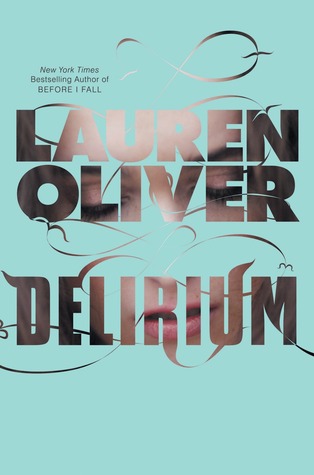
Delirium (Delirium #1) by Lauren Oliver

It's been exactly a month since the last time I posted something. It definitely was not because I hadn't read anything for I've read three books in that time, it's that time kind of got away from me and to be totally honest, for at least one of the books, I was at a loss as to what to say. But I'm back now and so lets get to it.

Delirium by Lauren Oliver was suggested to me on Borders.com because I read Hunger Games. It is similar to Hunger Games in that it is satirical and it has to do with government control (common terms I keep seeing are "dystopia book" or "dystopia novel"). The difference is that in Hunger Games the oppression is a means of punishment as well as power, while in Delirium the citizens are made to believe that the government is not out to control them, but to protect them. Specifically to protect their health.

Delirium (Delirium, #1)Delirium (Delirium, #1)Delirium

Summary
In this society, Love (or as they call it amor deliria nervosa) is considered to be a disease. It is believed to be the cause of all illnesses, misery, war, and turmoil in past generations. At some point in the past, the government came up with a cure (referred to from this point on as "the cure"), an injection that is given to teenagers on their eighteenth birthday (any sooner risks complications). If things go well, you'll be cured of amor delira nervosa, go to college, marry a mate out of a group the Government finds fitting for you, have children and live a happy healthy life. If things don't go well, you're considered an "Invaild" and a risk to society and are sent to "the wilds". All children under 18, or "uncureds", are kept from getting deliria by segregating uncured boys from uncured girls and by enforcing a curfew.

Madelena (Lena) is 95 days away from her procedure and cannot wait. Her mother, who was still an "uncured" after receiving "the cure" several times, committed suicide years ago. Her father was considered a "sympathizer" (one who is against the cure) and ran away when she was really young. Since then she has lived with her aunt and cousins. Lena then meets Alex, a confident, mysterious boy who works for the labs, and she begins to experience the beginning signs of amor deliria nervosa. As Lena and Alex get closer, Lena begins to question the world she's always known and wonders if its really as happy and safe as it is made to seem. When Alex unleashes a bombshell that turns Lena's world upside down, she wonders if the government she was taught to trust has actually been deceiving her and the whole society.

My Review
The main thing that I love about this book, pardon the pun, is the concept. So many books, poems, plays, songs and movies have been created over the centuries trying to explain the complicated concept of love. That despite it's downsides, it is the most wonderful feeling in the world. The ultimate aspiration of man kind. In this novel, Lauren Oliver spends hundreds of pages saying how it isn't great at all and can actually be dangerous. The society Ms. Oliver creates is unfathomable to the majority of readers. How can one go through life without feeling any sort of love? Not just romantic love, but platonic love, unconditional love, the love of a parent to a child, of an owner to their pet (there is a scene with a dog that almost made me cry). Ms. Oliver shows us that it is a very dry, boring, and monotone existence. Where parents can't console their children. Where a person can only manage a small weak smile at something happy or funny. Even a long embrace or a kiss longer than a peck is considered dangerous if you're uncured. I think it is this that makes every encounter, every kiss Lena and Alex share more exciting, because it's more than just taboo, it's forbidden.

One thing the struck me was this society's belief that love is the cause of all illness, misery and war in the world. First of all, with the exception of emotional disorders (i.e., depression, bipolar disorder), the majority of illnesses cannot in any way be linked to love without many degrees of separation. Plus, even with emotional disorders and misery, many times they occur from losing love, not having it. So that believe is easily defeated. Second, the majority of wars stem from the exact opposite of love, which is hate. The argument can still be made that love is still the culprit for without love there is no hate. Thus, if you erase love and there will be no more hate. But as we can see by looking at this society, this does not a utopia make. It may appear to be on the surface, but in the absence of love, life is absent. What is the point of being alive if you can't actual live. I'm as serious as they come and even I know that a part of living is occasionally letting your hair down and having fun and enjoying what life offers.

For those "action" people out there, I will admit that this book is a bit slow in the beginning. But Ms. Oliver's writing is so enticing, even poetic at times, that you cannot help but stick it out. The characters are so developed that they are almost three dimensional.  The reader can feel Lena's confusion and disillusionment as she experiences it. How can she go against everything she's ever known? When the rose colored glasses are removed, however, they're fully removed and you witness the harsh realities right along with Lena.  There are a few twists throughout the story, particularly at the very end, which I must say I wasn't completely thrilled with. However, this is the first book of a trilogy, so there is room for a lot of things to happen.