Friday, October 21, 2011

Room

Room  Room
Room by Emma Donahue is about this woman who was kidnapped 7 years prior and kept in a one room shed in the back of the home of her abductor, whom is referred to as Old Nick. The book begins with the 5th birthday of her son Jack who is the product of Old Nick's almost nightly raping. The woman tries her best to make this a happy birthday for him despite the fact that they are trapped in this one room. This has all the making of a sad and depressing story, similar to the true story of Jaycee Dugard, but here is where Donahue spins things. The entire novel is told through the eyes of 5 year old Jack.

The change in perspective is what makes this story so wonderful. Even though the story is told from the point of view of a 5 year old, it is not meant for a 5 year old to read.While Jack speaks of normal, light, childhood things such as Dora, books, and games, he also describes darker, more adult subjects, such as the visits from Old Nick and the days when Ma is "gone" and remains in bed all day. However, in describing darker things, Jack describes it like it's normal, because this is all he's ever known in his 5 short years. Anything beyond that small room in which they are confined, which Jack refers to as outer space, is unreal and scary for Jack. All the while, we the reader, can see the true gravity of the situation and just how small Jack and Ma's world is in that shed.

Although this story is told through the eyes of Jack, we still get a glimpse of Ma's feelings. While Jack is happy just being in a small room with his Ma, Ma feels like a prisoner and yearns for the outside world she knew before she held captive. She knows, as we the readers know, that this small room cannot hold her and Jack forever. She tries her very best despite the bleak situation to keep Jack healthy, happy, well educated, and constantly entertained. This is definitely not an easy feat as many parents know, particularly keeping young children entertained. However, Ma tries her best and does an amazing job of coming up with fun and creative things for Jack to do despite their very limited resources (i.e., race track around the bed for exercise, egg shells threaded together to make a snake). Ma also finds unique ways to keep Jack safe. Even though Old Nick is essentially Jack's father, Jack has never gotten to know him or vice versa. Before Old Nick visits, Ma hides Jack in a wardrobe, which seems rather cruel on the surface. But in reality, this is yet another way Ma protects Jack. She doesn't want Jack to be exposed to the likes of Old Nick and his abuse; she'd rather lock him away because at least that way she is sure that he is safe.

This book we very well put together and beautifully written. There is enough action and suspense to keep you guessing. I found Jack's point of view of the world to be at many times fun and imaginative. It really reminds you of how small the world can be to a young child and how important exposure to the outside world is for children.  There are instances where we are left wishing that we could hear Ma's thoughts, but ultimately I found hearing the story through Jack's eyes to be so much lighter and at times comical that I found myself not missing Ma's point of view.

Wednesday, October 19, 2011

How to be an American Housewife by Margaret Dilloway


How to Be an American Housewife
Summary
How to Be an American Housewife by Margaret Dilloway is story about culture, tradition, family strife, and mothers and daughter. Shoko is a Japanese woman who marries an American GI after WWII and moves to America. Her father agrees with the union as he feels it is the best way for Shoko to get a better life. However, her younger brother, fueled with anger at the Japanese losing the war and the resulting American occupation, feels Shoko has shamed her family and her country. For decades the two do not speak. When a much older Shoko falls ill and feels her life is about to end, she is eager to visit Japan one last time to find her brother. When it's apparent that she is too ill to make the trip herself, she asks her daughter, Sue, a divorced mother and the object of much criticism from Shoko, to make the trip and find her brother for her.This trip brings to light a long family secret that effects the family in various ways.

My Review
I found this book to be an enriching and quick read. The book is split between the points of view of Shoko and Sue, which I feel is the best way to write this novel because it allows us to get the full story. Typical mother-daughter conflicts exist between Shoko and Sue that cross over many cultural boundaries. Shoko has very high hopes and standards for Sue, but because of her upbringing she has difficulty expressing her true feelings, that of love and overall pride, towards her daughter. Sue feels she is nothing but a great disappointment to her mother due to Shoko's constant criticism. Sue believes that no matter what she does, she will never live up to her mother's expectations and will therefore never be able to please Shoko. Thus, Sue is often indifferent, defiant, and rebellious. What makes these conflicts even more difficult are cultural clashes as well as generation clashes. Sue was not allowed to read teen magazines, wear jeans, or interact with boys like other American girls because, according to Shoko and her husband, these were not things a proper Japanese-American girls should do. The result was a daughter so naive and desperate for freedom that she married the first boy she kissed, had a daughter at a young age and ended up divorced.

What sort of disappointed me about this book is that the title is a bit misleading. Even though each chapter begins with an excerpt from a book called How to be an American Housewife, which Shoko's husband gave to Shoko in order to make her transition into American life easier, the novel doesn't really go into Shoko's adaptation into life as an American housewife. Dilloway does express how difficult it was for Shoko to learn the language and to make friends with the other American housewives and the effect it had on her children. That is important and Dilloway does it quite well.  There are only a few instances, however, where we experience Shoko's life as an American housewife: the times where Shoko refused help from her mother-in-law with housework during visits due to Japanese customs and when Shoko learned how to make American spaghetti and meatballs. In fact, without the excerpts at the beginning of each chapter, we don't really see a lot of the cultural differences between the Japanese housewife and the American housewife and what Japanese women have to learn (or unlearn) to be a proper American housewife. I think if Dilloway had spent a little extra time going into that, it would've made this novel even more powerful. As the novel stands, I do recommend it to those, like me, who are fascinated by Asian culture and like strong female protagonists.

Sunday, October 16, 2011

Classic Mashups


I attended my third Comic Con today and book publishers such as Simon & Schuster, HarperCollins and Random House had booths there. It was there that I made a interesting discovery....Classic mashups. For those of you who were like me and were completely unaware that such a thing existed, it's basically authors taking classic novels from authors like Kafka, Charlotte Bronte, Jane Austen, Louis May Alcott, etc, and giving it a different spin. Most of them are horror based with Zombies, Vampires, Werewolves and Sea Serpents. But there are somewhat lighter ones like The Meowmorphosis The Meowmorphosiswhich takes Kafka's classic Metomorphosis The Metamorphosis and has the main character turn into a man size kitten rather than a cockroach. The first one that caught my eye was at the S&S booth called Jane Slayre written by Sherri Browning Erwin Jane Slayre: The Literary C.... This book particularly took my interest because I remember having to read Jane Eyre Jane Eyre in high school and completely loathing it (and I was not exactly one of those students who hated every book I was assigned just because it was an assignment). I actually recall a college English professor raving about it in class, getting completely nauseated and openly expressing my total dislike of the book. In Jane Slayre, judging by the blurb and what I've read on Amazon.com, turns the classic Reed family into vampires and Jane's classmates into Zombies all the while keeping the heroin Jane pretty much the same. From what I've read about other books in this seemingly growing genre such as Wuthering Bites Wuthering Bites and Little Vampire Women Little Vampire Women such minor changes remain a constant. In reading a excerpt from Jane Slayre, the text itself seems to remain ultimately the same, except that instead of using words like "dinner" and "dining"  Erwin uses words like "prey" and "hunting". Many fans of these classics may find this be blasphemous and a ploy to make money off of the vampire/werewolf/zombie fad. Others may be intreguiged to read a lighter comedic spin on the classics. One thing is for certain, horror and scifi fans who deem such classics as out of date and boring will most likely find these books to be a fun mix. I've personally ordered Jane Slayre, Little Vampire Women and Wuthering Bites. I will definitely be blogging my findings once I read them.

Tuesday, September 6, 2011

Before I fall... by Lauren Oliver

Before I Fall
Before I fall is the second book I've read by Lauren Oliver and it was actually her first book. Nine times out of 10 your first book is never your best work, and that definitely applies here. Oliver's writing style remains the same giving the novel many good points and I was definitely engrossed in the story. So I will not say that I absolutely disliked the book. However, compared to Delirium, this novel was lacking.

To quote other reviewers of this book, it's the movie Groundhog Day meets the movie Mean Girls. The plot is simple. The narrator, Samantha (Sam) Kingston, a pretty, popular girl, gets into a car accident with her friends after a party one night. Then, she wake up and relives the same day all over again. She relives this same day several time with different occurrences and realizations each time. Growing bored with reliving this day, she is desperate to do whatever is needed to break this cycle.

My problem with this book is the narrator. Sam is a completely shallow, narcissistic, self-absorbed teenager. She believes that she and her friends rule her school because they're beautiful, popular, and everyone wants to be them...well the majority of them. Oliver attempts to elicit sympathy by constantly stating the fact that Sam was once a nerdy outcast. However, I don't feel that this warrants sympathy. To me, it is all the more reason that she should be a little more compassionate and not be so quick to judge those who are different or "lesser" than her. Her treatment of Kent is a good example. She used to be close friends with him when they were younger, when she was a nerdy outcast. Unfortunately, he's now considered a geek at their school. He's obviously in love with Sam, as she obnoxiously admits,  yet Sam treats him terribly and won't  consider dating him because it would be bad for her image. Meanwhile the guy she's currently dating, who is cute, extremely popular and the object of Sam's affection for many years, treated her the same way in the past. She does experience many pangs of guilt as the story progresses and she does learn and grow as a character, so with time she did grow on me. But I definitely had a hard time rooting for her which, considering that she's the protagonist, didn't sit well with me.

What Oliver does accomplish with this novel is show all the layers of the cruel brutal world of high school social classes, the effects of bullying, and that every action has a consequence. Everyone who has experienced high school, and lived to speak of it, knows that high school is tough. Not because of the academic work; that's unfortunately one of the last things people talk about when they relay their high school experience.  High school is tough because of social classes. The pretty, strong, and popular rule the school and frown and belittle those whom are considered beneath them, namely the nerds, geeks, and all those in between. It is only when they grow up that they realize how unfair and meaningless all such judgments are. In this YA novel, we come to learn that Sam is meant to make these realizations sooner rather than later. As she continues to relive this one particular day, it is soon realized that the only way to end this vicious cycle is for Sam to see the error of her ways,  make some important changes and, hopefully, change the ultimate outcome of the day. At the end of each "day", Sam comes away with some realization those closest to her fail to see. In addition, Sam also learns that things are not always as they appear and that people are not always who we believe them to be. Two questions remain throughout the novel: Are her realizations and new actions be enough to end this cycle? What will ultimately happen to Sam? These questions kept me turning pages.

I still believe Oliver to be a good writer. She incorporates enough action and suspense to keep the reader while at the same time teaching valuable lessons about life. Even though I can't entirely root for her, watching Sam struggle, learn the error of her ways and grow as a character is refreshing. It shows that given the chance anyone can change. The factor that she only has this one day to make a difference adds to the suspense and makes the plot fascinating, even though it has been done before. The cast of characters and their personalities and actions are very realistic and believable. So for a first novel, this book was decent. But it's definitely not one of my favorites. I still enjoyed Delirium more and look forward to the final books in that trilogy.

Wednesday, May 25, 2011

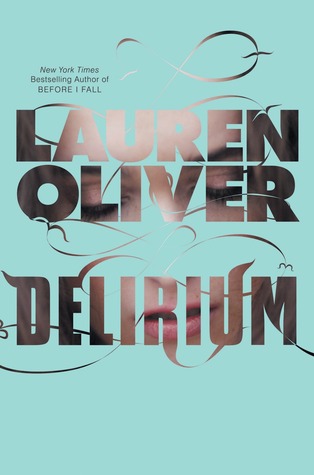
Delirium (Delirium #1) by Lauren Oliver

It's been exactly a month since the last time I posted something. It definitely was not because I hadn't read anything for I've read three books in that time, it's that time kind of got away from me and to be totally honest, for at least one of the books, I was at a loss as to what to say. But I'm back now and so lets get to it.

Delirium by Lauren Oliver was suggested to me on Borders.com because I read Hunger Games. It is similar to Hunger Games in that it is satirical and it has to do with government control (common terms I keep seeing are "dystopia book" or "dystopia novel"). The difference is that in Hunger Games the oppression is a means of punishment as well as power, while in Delirium the citizens are made to believe that the government is not out to control them, but to protect them. Specifically to protect their health.

Delirium (Delirium, #1)Delirium (Delirium, #1)Delirium

Summary
In this society, Love (or as they call it amor deliria nervosa) is considered to be a disease. It is believed to be the cause of all illnesses, misery, war, and turmoil in past generations. At some point in the past, the government came up with a cure (referred to from this point on as "the cure"), an injection that is given to teenagers on their eighteenth birthday (any sooner risks complications). If things go well, you'll be cured of amor delira nervosa, go to college, marry a mate out of a group the Government finds fitting for you, have children and live a happy healthy life. If things don't go well, you're considered an "Invaild" and a risk to society and are sent to "the wilds". All children under 18, or "uncureds", are kept from getting deliria by segregating uncured boys from uncured girls and by enforcing a curfew.

Madelena (Lena) is 95 days away from her procedure and cannot wait. Her mother, who was still an "uncured" after receiving "the cure" several times, committed suicide years ago. Her father was considered a "sympathizer" (one who is against the cure) and ran away when she was really young. Since then she has lived with her aunt and cousins. Lena then meets Alex, a confident, mysterious boy who works for the labs, and she begins to experience the beginning signs of amor deliria nervosa. As Lena and Alex get closer, Lena begins to question the world she's always known and wonders if its really as happy and safe as it is made to seem. When Alex unleashes a bombshell that turns Lena's world upside down, she wonders if the government she was taught to trust has actually been deceiving her and the whole society.

My Review
The main thing that I love about this book, pardon the pun, is the concept. So many books, poems, plays, songs and movies have been created over the centuries trying to explain the complicated concept of love. That despite it's downsides, it is the most wonderful feeling in the world. The ultimate aspiration of man kind. In this novel, Lauren Oliver spends hundreds of pages saying how it isn't great at all and can actually be dangerous. The society Ms. Oliver creates is unfathomable to the majority of readers. How can one go through life without feeling any sort of love? Not just romantic love, but platonic love, unconditional love, the love of a parent to a child, of an owner to their pet (there is a scene with a dog that almost made me cry). Ms. Oliver shows us that it is a very dry, boring, and monotone existence. Where parents can't console their children. Where a person can only manage a small weak smile at something happy or funny. Even a long embrace or a kiss longer than a peck is considered dangerous if you're uncured. I think it is this that makes every encounter, every kiss Lena and Alex share more exciting, because it's more than just taboo, it's forbidden.

One thing the struck me was this society's belief that love is the cause of all illness, misery and war in the world. First of all, with the exception of emotional disorders (i.e., depression, bipolar disorder), the majority of illnesses cannot in any way be linked to love without many degrees of separation. Plus, even with emotional disorders and misery, many times they occur from losing love, not having it. So that believe is easily defeated. Second, the majority of wars stem from the exact opposite of love, which is hate. The argument can still be made that love is still the culprit for without love there is no hate. Thus, if you erase love and there will be no more hate. But as we can see by looking at this society, this does not a utopia make. It may appear to be on the surface, but in the absence of love, life is absent. What is the point of being alive if you can't actual live. I'm as serious as they come and even I know that a part of living is occasionally letting your hair down and having fun and enjoying what life offers.

For those "action" people out there, I will admit that this book is a bit slow in the beginning. But Ms. Oliver's writing is so enticing, even poetic at times, that you cannot help but stick it out. The characters are so developed that they are almost three dimensional.  The reader can feel Lena's confusion and disillusionment as she experiences it. How can she go against everything she's ever known? When the rose colored glasses are removed, however, they're fully removed and you witness the harsh realities right along with Lena.  There are a few twists throughout the story, particularly at the very end, which I must say I wasn't completely thrilled with. However, this is the first book of a trilogy, so there is room for a lot of things to happen.

Monday, April 25, 2011

The Help by Kathryn Stockett


The Help The Help The Help

I took a writing class a couple of weeks ago and the instructor said that one question to ask when writing is why tell this story now. What is so unique about this story that it needs to be told at this particular time? Well I think the same question can be asked when reading something. Why is this story being told now? This question may not be easily answered with every book. Sometimes there really isn't a reason. And there are times when there is one distinct reason or possibly many reasons.

For The Help by Kathryn Stockett, the answer falls under the latter category. The reason the stories of these two maids and this young white woman from Jackson, Mississippi in the 1960s are being told at this particular time is because in order to appreciate where we are we sometimes have to remember where we came from. Our nation has recently made history by electing the first African-American President. But just a few short decades ago this accomplishment was the furthest from our thoughts. There was a time in our history where a portion of our citizens weren't allowed to attend the same schools, the same libraries, live in the same neighborhoods, even use the same restrooms or water fountains as others. A time where someone like our current White House inhabitant would be looked upon as diseased or less than human. I think this is an important thing to remember in order appreciate, whatever your political views are, just how important this accomplishment is for the Nation. As a young black woman living in New York City, I can't even begin to imagine living in a time where I wasn't allowed to attend whatever school or use whatever facilities I pleased, and I'm sure there are many out there who feel the same way. That such rules are absurd.  But for Aibileen, Minny, and the other maids of Jackson this was their daily reality.

The story is told in sections in the points of view of Aibileen, Minny and Skeeter. Aibileen and Minny, being black maids, come from an entirely different world than Skeeter, a young southern white woman. Two worlds that at the time were never to intertwine except within the roles of employer and employee. Skeeter, in trying to achieve her goal of being a writer, decides to write a book about life as a maid from the eyes of black maids and goes to Aibileen, Minny and other maids who work in Jackson for their stories. With the actions of Rosa Parks, Martin Luther King, and the Civil Rights Movement going on in the background, this venture proves to be both dangerous and inspiring. More importantly, their venture breaks down the barriers of society's prejudices and injustices and allows these three women and the separate worlds they reside in to come together and realize just how thin those barriers are.

One of the major challenges Kathyrn Stockett felt she had to face in writing this book was being able to express life as a black maid during this time period even though she, being a southern white woman, never experienced it herself. I think after reading this book many can agree that it is so well written and the points of view are so well expressed that you honestly forget who actually wrote it. Even down to the dialect. The characters, even some of the minor ones, are so well developed you feel like you know them personally and if you were meant to like them, then you would always like them and if you were to hate them you would always hate them. For example, even during times of total humiliation, it was impossible to feel any sympathy for Miss Hilly. You're actually mad to feel sort of glad when something bad happens to her. And the switching between points of view allows for you to not only see the world through one particular character's eyes and how they interact with others, you also see how they're perceived by others and how other characters interact with them. For example, when Aibileen and Minny interact, from Aibileen's point of view, Minny comes off as strong and tough, although Aibileen feels Minny may not be as tough as she lets on. But when you look from Minny's point of view, you find just how scared Minny actually is and what feelings and thoughts she's hiding. 

The pacing was good as well. Kathyrn Stockett knew how to keep us intrigued. She picked the exact right moments to leave one character's point of view and move on to the next. And when you think that nothing else could surprise you, another surprise comes along, all the way to the very end.

I read on abcnews.com that some found the language and portrayal of black people in the book to be a little offensive, particularly when the maids refer to themselves. During a scene where Aibileen encounters a cockroach in her kitchen, she says "He big, inch, inch and a half. He black. Blacker than me." Some felt that this particular description was offensive because it makes the comparison of an black person to a cockroach. I did not particularly find this line offensive. I just don't think that way. But even if I did, I think you have to think within the context of the time that's being portrayed here. This is a time where black people were viewed as less than human, like vermin. And I feel that it isn't completely far fetched that despite  how unjustified you think things are or how proud you are, if you hear from the time you're little yourself being compared to a cockroach, in describing a cockroach you may make the comparison to yourself. By today's standards, making a comparison like that is offensive and degrading, but maybe in Jackson, Mississippi in the 1960s it wasn't. There is a lot of harsh language in this book and I don't mean swear words. But it goes with the time period, so viewing the language by today's standards is inaccurate.    

I found out recently that this book was made into a movie and is due in theaters this August. I saw the trailer for it and I must say I was disgusted. The actors that were chosen for the roles were nothing like what I had pictured characters. For example, at several points throughout the book, it was implied that Miss Hilly Holbrook was on the chubby side. The actress they chose to play her, Bryce Dallas Howard, doesn't look all the chubby to me. And it looks like they may have changed some of the plot, which I personally hate. I can understand cutting stuff out to save time and keep the action going, that's fine, but changing it. If it ain't broke don't fix it. The story has enough action in it that just cutting it here and there would've sufficed. From a cinematic point of view, it would probably be a fun summer movie in and of itself. But as far as giving justice to the fine literary work it is based on, I don't think so. I think it distorts it, as many films based on books do these days. So I ask anyone who is considering watching the film, do not judge the book on the movie. The book is great, completely lives up to it's hype and is well worth a shot.

Monday, April 18, 2011

Shanghai Girls (Shanghai Girls #1) by Lisa See

Shanghai Girls
I read Shanghai Girls by Lisa See months ago and I have been debating for a bit as to whether or not I should write my thoughts on it considering that it has been a while since I read it. But then the other day I read something concerning the book, which I'll divulge a the end of this post, that made me happy so I decided what the heck.

I like books on Asian culture. One of my favorite authors is Amy Tan, author of The Joy Luck Club The Joy Luck Club, The Hundred Secret Senses The Hundred Secret Senses, and The Bonesetters Daughter The Bonesetter's Daughter. So when I went into Barnes and Nobles one day while waiting for a friend and I saw Shanghai Girls, I was instantly intrigued and I read the first chapter while I waited.

Shanghai Girls is about two sisters, Pearl and May, who live in Shanghai, China in the mid 1930s. They come from a wealthy family and are well educated. They work as models for Chinese calenders, or calendar girls as they call it, and have tons of modern Shanghai clothes. The last thing they are thinking about is getting married, let alone an arranged marriage. However, they find out that their father put the family in debt due to his gambling habit and, as a means to avoid losing everything, he sells Pearl and May to a Chinese-American man to be married to his American sons who live in California. Pearl and May refuse to go until Japanese bombs and soldiers invade their town. So they travel to California to be with their husbands. There they have to adapt to living with strangers in a strange land and keeping a secret that changes their lives forever.

The main theme of this novel is sisterhood. Pearl and May are very close but they couldn't be more different. Pearl is the oldest and is viewed as the "uglier" of the two. In fact, the first line of the book is Pearl's father criticizing Pearl's looks. What Pearl definitely is is intelligent, but in 1930s Confucius China "an intelligent woman is a worthless woman". And as the oldest, she is expected to look after and protect her sister May. May is known primarily for her beauty, charm and cleverness. She knows the right look and the right things to say to get what she wants.

As much as Pearl and May love and value each other, like all sisters, they also know how to get on each others nerves. Pearl is secretly jealous of May because she seems to get away with less responsibility and tends to have more fun than Pearl. Pearl resents the fact that she always has to be the sensible one, the one that always does the right thing, the one who is always protecting and saving May. May's impulsiveness angers Pearl; she constantly wishes that May would stop and think before she does things. May, on the other hand, is jealous of Pearl because people tend to trust Pearl more. Anything vain or shallow, they look to May, but anything of importance is put on Pearl. May feels that Pearl is valued more because of her intelligence. Pearl's sensibility and cautiousness drives May crazy and May wishes that Pearl would loosen up and enjoy life a little more. However, throughout the book, all of these feelings are harbored in secret. On the surface, Pearl and May are as close as two sisters can be, they're each others best friend and they mainly express love and respect for each other because in the end they're all they have of their home.

Another theme of this novel is culture and immigration. Pearl and May experience culture shock and prejudice when they come to America. Moving from a wealthy home in Shanghai to a poor apartment in California show Pearl and May how much they took their life in Shanghai for granted. They are forced to do housework, unable to go out alone, and any money they make goes into the household pot instead of in their pockets. With American at war, Pearl, May and their new family experience prejudice and live in constant fear that they will be deported back to China. Pearl and May also learn that not only was their view of America different than what it actually is, but America's view of life in China and Chinese culture is skewed as well. But as China turns Communist and Pearl and May learn how much Shanghai has changed in their absence, they know that they are better off where they are than back home in Shanghai.

I really liked this book, except for the ending. It ended in kind of a cliff hanger and I wasn't at all happy with it because everything had just come to a head. However, I just found out that the sequel, Dreams of Joy, is coming out in May. So I guess we'll have to wait until then to find out how everything ends.